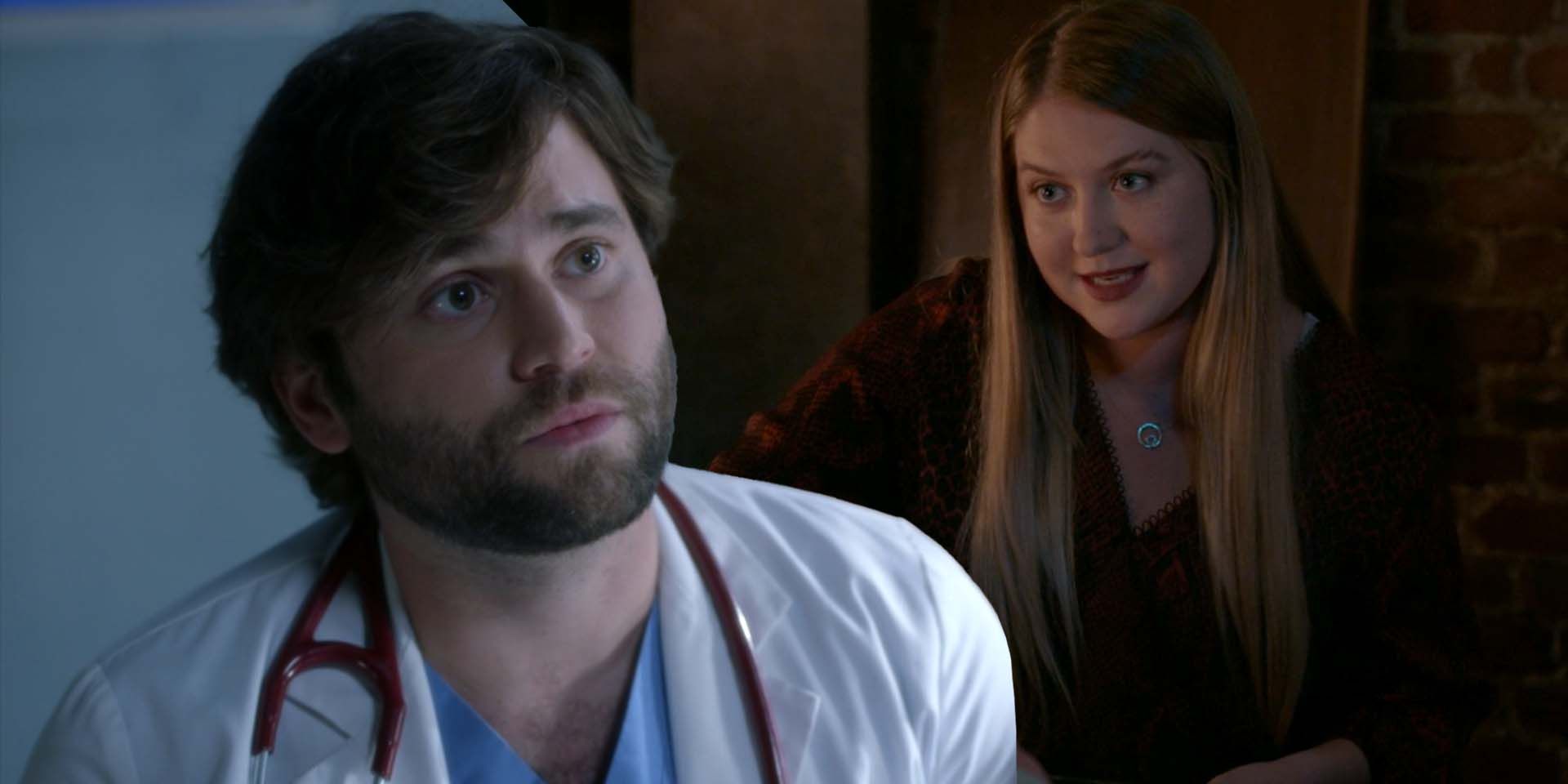
You know those Grey's Anatomy episodes that just stick in your craw? The ones where you’re scrolling on your phone and then suddenly you’re sobbing into a throw pillow? For a lot of long-time fans, the story of Dr. Clatch is exactly that. It isn’t about a plane crash or a hospital shooting. It’s about something way more quiet and, honestly, way more devastating: growing old and losing your person.
Dr. Thomas Clatch appeared in Season 13, specifically in the episode "Till I Hear It From You." He wasn’t a series regular. He wasn’t even a recurring villain. He was just a man—a world-class surgeon, actually—who walked into Grey Sloan Memorial with his wife, Elsie, and reminded everyone what "happily ever after" actually looks like when the clock starts running out.
The Surgeon Behind the Legend: Who was Thomas Clatch?
Thomas Clatch wasn't some random patient. In the universe of the show, he and his wife Elsie were basically surgical royalty. Think of them as the prototype for Meredith and Derek if they had actually made it to their 80s without, you know, a semi-truck getting in the way.
They were pioneers.
Dr. Clatch was portrayed by the veteran actor Hal Holbrook. If he looked familiar, it’s because Holbrook was an absolute powerhouse in Hollywood for decades before he passed away in 2021. Bringing someone of his caliber onto the set gave the character an immediate weight. You believed he had spent fifty years holding a scalpel. When he walked through those doors, he wasn't just a "case of the week." He was a peer to people like Richard Webber and Miranda Bailey, even if he was technically the one seeking help.
The chemistry between Thomas and Elsie (played by June Squibb) was the real hook. They didn't just love each other; they liked each other. They bickered. They made fun of the "young" doctors. They showed a version of a medical marriage that was functional, which is a rare bird in the halls of Grey Sloan.
What happened to Dr. Clatch and Elsie?
The medical drama in this arc focused on Elsie. She needed a pretty significant procedure—specifically, she had a massive aortic aneurysm. It’s the kind of thing that’s a ticking time bomb.
Thomas was right there. He wasn’t just a worried husband; he was a surgeon watching other surgeons. Can you imagine the pressure on Maggie Pierce? You’re operating on the wife of a legend, and the legend is standing right there, probably mentally critiquing your technique.
The surgery itself actually went well. That’s the kicker. In typical Shonda Rhimes fashion, they give you the "win" first. Elsie woke up. They joked. Thomas was relieved. They were planning their next chapters.
And then, the "Grey's Twist" happened.
It wasn't a surgical complication in the way you'd expect. Elsie suffered a massive post-operative stroke. One minute they were talking about their lives, and the next, she was gone. Seeing a man as composed and brilliant as Dr. Clatch simply crumble was one of the most raw moments the show has ever produced. He didn't yell. He didn't blame the doctors. He just looked... small.
Why this specific guest arc still matters years later
Most guest stars on Grey's are there to provide a metaphor for whatever drama Meredith or Alex are dealing with that week. But the Clatches felt different.
They represented the "End Game."
Throughout the series, we see these high-stakes romances that are all fire and passion and usually end in tragedy or someone moving to Switzerland. Dr. Clatch showed the audience what happens when you actually win the game of life. You get fifty years. You get to grow old. But the "prize" for that long, happy life is eventually having to say goodbye.
It hit Richard Webber particularly hard. Seeing a man he respected lose his lifelong partner forced Richard to look at his own life with Catherine Avery. It reminded the audience that even the "gods" of the OR are eventually just humans who have to face the inevitable.
The Hal Holbrook Effect
We have to talk about the acting. Hal Holbrook didn't do "TV acting." He did "soul-crushing realism."
When Elsie dies, Thomas has to make the decision to stop resuscitation. He says, "Let her go." Three words. But the way he said them? It wasn't just a medical directive. It was a husband releasing his wife from pain while simultaneously breaking his own heart.
The scene where he sits with her body is filmed with a lot of space. It’s quiet. There’s no swelling orchestra music trying to force you to cry. You cry because the silence is deafening. Dr. Clatch reminded us that for all the fancy robots and cutting-edge heart transplants, doctors are often powerless against the simple passage of time.
Analyzing the Medical Realism of the Clatch Case
While Grey's Anatomy takes some... liberties with how hospitals actually function (no, interns don't run the entire hospital), the Clatch case was surprisingly grounded.
- Aortic Aneurysms in the Elderly: These are common and incredibly dangerous. The "watchful waiting" period they mentioned is a real clinical practice.
- Post-Op Stroke: This is a very real, very terrifying risk for any major cardiovascular surgery, especially in patients over 80.
- The "Lucid Interval": Elsie waking up and being fine before the stroke is a common phenomenon. It’s what makes these deaths so traumatic for families—the false sense of security.
Common Misconceptions about Dr. Clatch
Sometimes fans get his story mixed up with other "older couple" plots. No, he wasn't the one with dementia (that was a different, equally sad arc). He wasn't the one who died in the woods.
Thomas Clatch was the survivor.
People also often ask if he ever came back. He didn't. His story was a self-contained masterpiece. Some fans theorize he died shortly after Elsie because of "Broken Heart Syndrome" (Takotsubo cardiomyopathy), which is a poetic thought, though the show never officially confirmed his fate after he left the hospital. Honestly, the idea of him just walking out into the world without her is almost sadder than if he had passed away right there.
Lessons from the Grey's Anatomy Dr. Clatch Episode
If you’re rewatching this episode, or seeing it for the first time, there are a few things that really stand out about how the writers handled this character.
- Respect for Elders: The show often treats older doctors as "past their prime," but Thomas was treated with immense reverence.
- The Reality of Consent: The episode dealt heavily with the idea of when to stop. Thomas, being a surgeon, knew exactly what "prolonging the inevitable" looked like. He chose dignity over a few more hours of heartbeat.
- The Impact on the Staff: This wasn't just a patient for Maggie. It changed how she approached her relationship with her mother, Diane, who was dealing with her own health crisis at the time.
How to watch the Dr. Clatch episodes
If you want to go back and hurt your own feelings, you’re looking for Season 13, Episode 17, "Till I Hear It From You." It’s currently streaming on Hulu and Netflix (depending on your region). If you’re doing a "Saddest Moments" marathon, put this one right after the episode where George dies and right before the Season 11 finale. It fits perfectly in that "I need a good cry" niche.
Actionable Insights for Fans and Aspiring Writers
- Study the Dialogue: If you're a writer, look at how little Thomas says in the final act. Great characters don't need monologues to convey grief.
- Watch the Hands: Hal Holbrook's physical acting—the way he touches Elsie's hand—is a masterclass in non-verbal storytelling.
- Context Matters: To get the full emotional weight, watch the three episodes leading up to it to see Maggie’s headspace. It makes the Clatch tragedy hit much harder.
The legacy of Dr. Clatch on Grey's Anatomy isn't about a medical miracle. It's about the one thing the show rarely explores with such raw honesty: the quiet, dignified end of a very long, very good life. It’s a reminder that even in a world of high-octane drama, the most powerful stories are the ones that feel the most human.
The episode doesn't offer a "fix" because there isn't one for old age. It just offers a moment of recognition. We see you, Thomas. We see what you lost. And we're all a little more grateful for the people we have because of it.