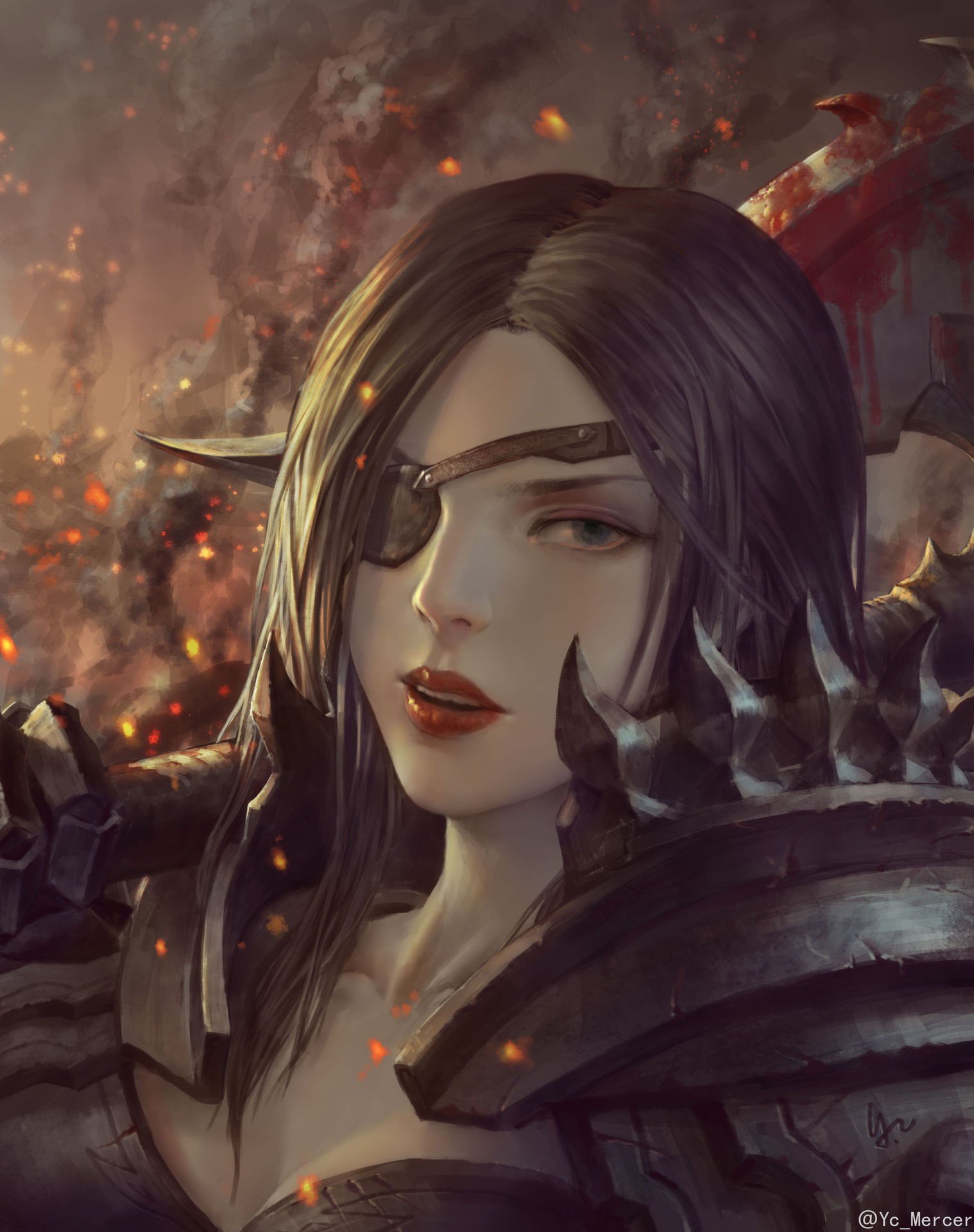
You’ve seen her. Even if you haven't watched a single episode of the 2012 horror hit Another, you have definitely seen the girl. She’s everywhere in the "dark aesthetic" corners of the internet. Pale skin, short black hair, a school uniform, and that iconic, slightly medical-looking white patch over her left eye. Mei Misaki isn't just a character; she’s basically the face of modern atmospheric anime horror.
But here’s the thing. Most people who share her picture think the eye patch is just a "creepy girl" trope. They think it’s just there for the vibes. It isn't.
In the world of Another—originally a novel by Yukito Ayatsuji before it was a manga or an anime—that eye patch hides something genuinely unsettling. It’s not a wound. It’s not an infection. It is a prosthetic, but it’s a prosthetic that can see things no human should ever see. Honestly, if you had a doll's eye that could spot the "color of death," you’d probably cover it up with some gauze too.
The Mystery of the Class 3 Curse
To understand Mei, you have to understand Yomiyama North Middle School. Specifically Class 3-3. The setup is simple but effective: back in 1972, a popular student named Misaki died. Instead of grieving normally, the class decided to pretend Misaki was still alive. They kept the desk empty. They talked to the air.
It was sweet. It was also a disaster.
By pretending the dead were living, they invited "The Phenomenon" into the world. Now, every year, an extra person—a dead person—joins the class. They don't know they're dead. Their memories are altered, and the world bends itself to make them fit in. The problem? When a dead person is in the class, people start dying in "accidents" that feel a lot like Final Destination.
Mei Misaki is the girl everyone ignores to try and stop the curse. She is the "non-existent one." By treating her like she doesn't exist, the class hopes to balance out the presence of the "extra" person.
It’s a lonely, brutal role. Mei takes it with a level of stoicism that is honestly kind of heartbreaking. She spends her lunch breaks on the roof alone. She walks home alone. She exists in a social vacuum because her classmates are terrified that acknowledging her will trigger a string of gruesome deaths involving umbrellas and elevator shafts.
What’s Actually Under the Eye Patch?
Let's talk about the eye. When Mei was young, she lost her left eye to a disease. Her mother—who is actually her aunt, but that’s a whole other layer of family trauma—is a doll maker. She crafted a special glass eye for Mei.
It’s green. Her real eye is red.
But the color isn’t the issue. The doll's eye allows Mei to see the "color of death." In the anime's lore, things that are dead or dying give off a specific hue that isn't visible to the naked human eye. When the "extra person" is standing in the room, Mei can see it. She knows who the ghost is.
So why doesn't she just say something?
Because Mei is observant. She’s seen how the curse reacts. She’s seen how humans react. She knows that pointing a finger and saying "that person is dead" leads to paranoia, lynch mobs, and more blood. She keeps the eye covered because the sight of death is overwhelming. Imagine walking through a school and seeing the literal stench of the grave on your friends. You’d wear a patch too.
Why Mei Misaki Still Dominates Anime Culture
There are plenty of anime characters with eye patches. There's Rikka Takanashi from Love, Chunibyo & Other Delusions, who wears one because she’s a "chunibyo" (basically a kid who thinks they have superpowers). There's Ken Kaneki from Tokyo Ghoul. But Mei feels different.
She represents a very specific type of isolation.
The "non-existent student" trope resonated with a lot of viewers who felt like outcasts in their own schools. Even though Mei’s situation is supernatural, the feeling of being invisible is universal.
The animation by P.A. Works also helped. The way they draw her—often surrounded by creepy ball-jointed dolls—creates an uncanny valley effect. Is she a person? Is she a doll? The show plays with this constantly. In the first few episodes, the protagonist, Kouichi, isn't even sure if he's talking to a ghost or a human. The eye patch is the barrier between those two worlds.
Common Misconceptions About the Character
- She isn't the ghost. A lot of people starting the series assume Mei is the "extra person" because she’s so creepy. She isn't. She’s actually the most grounded person in the show.
- The eye patch isn't for a wound. Unlike Ciel Phantomhive or other characters, there is no scar. The eye is physically perfect, just "different."
- She isn't a "kuudere" just for the sake of it. While she seems emotionless, it’s a defense mechanism. If you were being treated as a literal ghost by your peers, you’d probably stop trying to crack jokes too.
The complexity of Mei Misaki comes from her burden. She holds the answer to the mystery from episode one, but she chooses when and how to reveal it based on the safety of others. That’s not a trope; that’s a character with incredible agency in a story that usually strips it away from teenagers.
How to Get the Most Out of Another
If you’re looking to dive into the story of the "eye patch girl," don't just stop at the anime. The original novel by Yukito Ayatsuji offers a much more cerebral experience. The anime leans heavily into the "splatter" horror—the gore is legendary—but the book focuses on the psychological dread of not knowing if your own memories are real.
Actionable Steps for Fans:
- Watch the "Episode 0" OVA: This is crucial. It’s called The Other - Blue Eyes and it explores Mei’s relationship with her twin sister, Misaki Fujioka. It makes her character arc in the main series ten times more impactful.
- Read the Manga: The art style is slightly different, focusing more on the gothic elements. It’s a great way to see the story from a more "illustrated horror" perspective.
- Check out the sequel: There is a sequel novel titled Another 2001. It follows a different set of characters but expands on the rules of the curse and the legacy of what happened during Mei’s year.
- Look for the Live-Action Film: It’s... a choice. It’s not as polished as the anime, but for completionists, it’s interesting to see how they tried to translate the "doll-like" appearance of Mei into real life.
Mei Misaki remains a titan of the horror genre because she isn't a monster. She’s a witness. In a genre where characters usually run away from the truth, she’s the one who stands still and looks it right in the eye—even if she has to keep one of them covered most of the time.