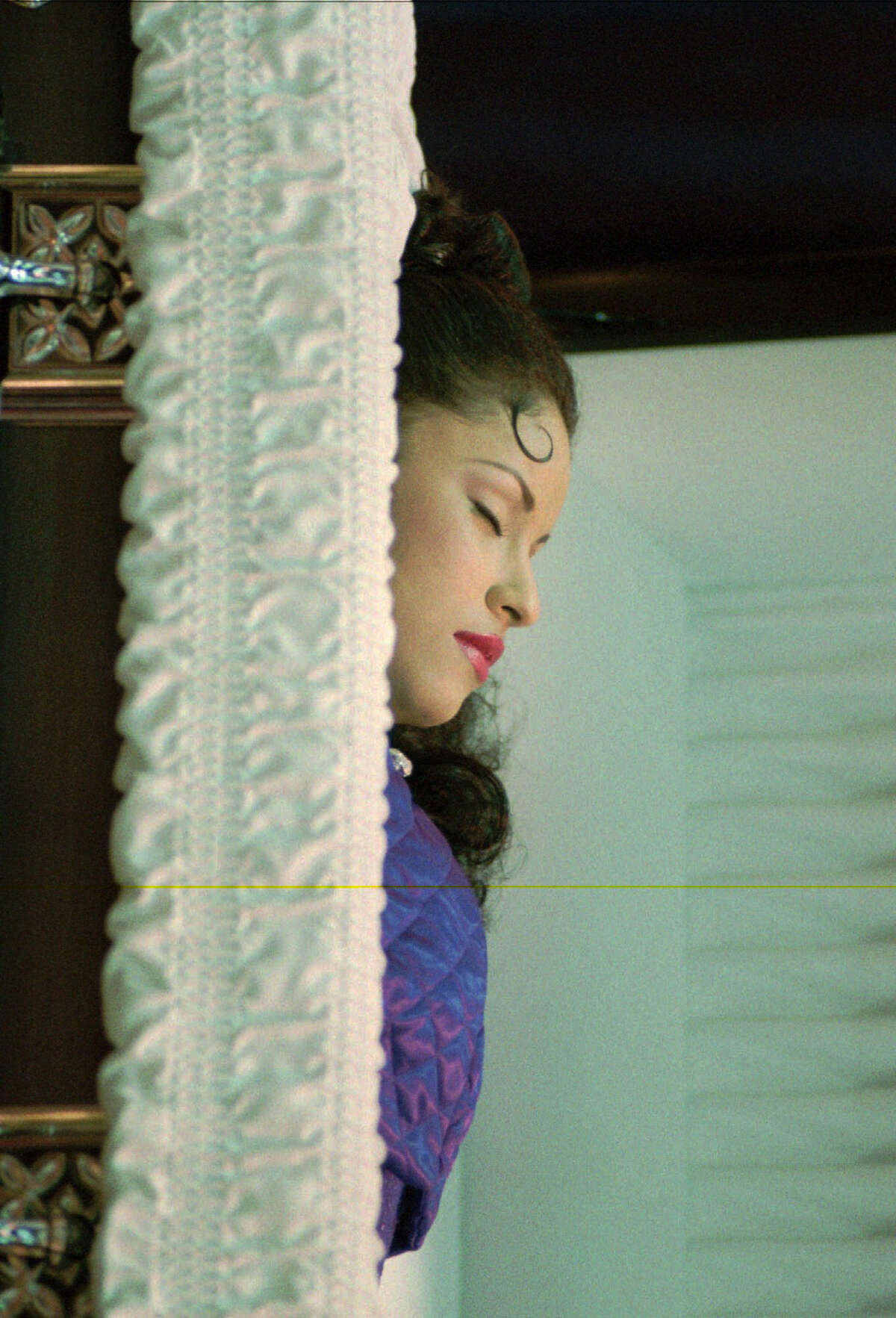
March 31, 1995. That’s the day the music died for millions of fans across the globe. But while the world was mourning the loss of the Queen of Tejano, a darker, much more invasive obsession was brewing. For decades, the search term selena en la morgue has haunted the fringes of the internet. It’s a phrase that triggers a weird mix of grief and morbid curiosity. Honestly, it’s one of those things that most people feel kinda guilty for looking up, but they do it anyway.
Why? Because the tragedy of Selena Quintanilla-Pérez wasn't just about a life cut short; it was about the absolute violation of her privacy that followed.
The Truth About the Selena Autopsy Photos
You’ve probably seen the grainy, black-and-white images or the "reconstructed" shots floating around sketchy forums. Let’s set the record straight: there were real photos leaked, and they caused a massive legal firestorm.
Back in late 1995, a national tabloid called The Globe did the unthinkable. They published six color autopsy photographs of Selena. It was a gut-punch to the Quintanilla family. They had spent months trying to maintain some semblance of dignity for Selena, only to have her most vulnerable state sold for a few dollars at a supermarket checkout.
The photos didn't come from thin air. While the family never sued the tabloid—mostly because they didn't want to drag her name through a longer legal battle—the damage was done. Those images are what most people are actually searching for when they type selena en la morgue into a search engine. They aren't "mysteries" or "hidden secrets." They are the documented evidence of a homicide, stolen from the records and exploited.
The 1995 Funeral Home Incident
Wait, there's more to the story than just the autopsy.
A year after the murder, Selena’s father, Abraham, and her husband, Chris Pérez, filed a lawsuit against Seaside Memorial Park. The accusation? A former janitor named Arnold Ortiz had allegedly taken four unauthorized photos of Selena while she was in her casket.
Rumors at the time were nasty. People said there were "embalming room" photos showing her nude corpse being shown in local bars in Corpus Christi. Talk about a nightmare.
The family eventually settled that lawsuit in 1997. The funeral home admitted Ortiz took the photos on April 2, 1995—the night before the funeral—after the public viewing had ended. He was fired instantly, and the negatives were supposedly handed over to the family. It’s believed Chris and Abraham destroyed those specific photos to make sure they never saw the light of day.
What the 2025 Autopsy Release Changed
Fast forward to late 2025. It had been 30 years since that day at the Days Inn. Suddenly, the autopsy report was back in the news because of new public records requests.
The report, signed by Coroner Lloyd White, is brutal in its clinical detail. It confirmed that Selena died from "exsanguinating internal and external hemorrhage." In plain English: she bled out.
The bullet, a hollow-point fired from a .38 Special, entered her back near her lower right shoulder. It hit the subclavian artery. This is a major vessel. Once that was severed, her survival chances were basically zero. Even though she made it to the lobby, her veins had already begun to collapse by the time paramedics tried to start an IV.
- Time of Death: Pronounced at 1:05 p.m. at Corpus Christi Memorial Hospital.
- The Path: The bullet punctured her ribs, hit the upper pulmonary lobe of her lung, and exited the upper front of her chest.
- The Findings: Her pupils were fixed and dilated upon arrival. She was clinically brain-dead almost immediately.
Why We Can't Stop Looking
Psychologists call it "morbid curiosity," but with Selena, it feels more personal.
She was the "perfect victim" in the eyes of the media—young, incredibly talented, and killed by someone she trusted. The term selena en la morgue persists because people want to see the reality of the violence to reconcile it with the "shining star" image they have in their heads.
It’s a way of processing the "unnaturalness" of her death. We see her smiling in the Houston Astrodome in that purple jumpsuit, and then we hear about the motel room. The human brain struggles to connect those two images. The morgue photos, as grim as they are, represent the finality of that transition.
But here is the thing: Selena was a person, not a true crime exhibit.
Moving Past the Morbid Images
If you’re looking for "answers" in those photos, you won't find them. The answers are in the trial transcripts and the witness testimonies from 1995.
Yolanda Saldívar is still in prison, having been denied parole as recently as March 2025. Her next chance isn't until 2030. The legal system has processed the "what" and the "how." Looking at autopsy images doesn't add to her legacy; it only feeds the exploitation that her family fought so hard to stop.
Actionable Steps for Fans and Researchers
If you want to honor Selena’s memory without falling into the trap of voyeurism, here is what you can actually do:
- Support the Official Archives: If you are looking for rare footage, check out the documentaries authorized by the family, like the recent Netflix projects. These use Suzette Quintanilla’s personal archives.
- Verify Your Sources: When you see a "leaked" photo online, remember that many are AI-generated or photoshopped fakes meant to drive clicks to malware sites. Don't click.
- Read the Books: Chris Pérez’s book To Selena, with Love offers the most intimate, human perspective on her life that avoids the sensationalism of the tabloids.
- Visit the Museum: If you're ever in Corpus Christi, the Selena Museum is the place to go. It’s where her real story—her clothes, her cars, her awards—is kept safe.
The obsession with selena en la morgue is a byproduct of a world that loves tragedy. But Selena was about life, music, and a "Bidi Bidi Bom Bom" rhythm that's way more important than a coroner's file.